

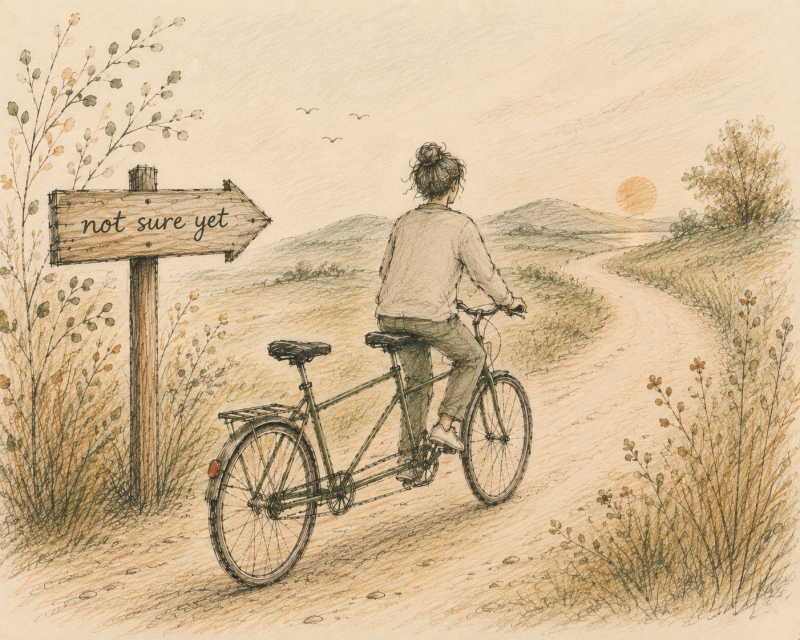
When you’ve been with someone for a long time, separation isn’t just about ending a relationship.
It’s about untangling a life.
This is the person who knows how you take your tea. Who knows from the look on your face that something’s wrong before you’ve said a word. They know the stories from years ago, the ones you’ve told a hundred times. They know the people in them. They were there for some of them.
There are the ridiculous nicknames that would sound completely absurd if anyone else heard them. The private jokes. The routines you never really noticed were routines. The look across a crowded room that somehow managed to convey an entire conversation.
And there are the memories.
Houses. Holidays. Christmases. Birthdays. Children growing up. People you’ve loved and lost. Times when money was tight. Times when life was good. Arguments you can laugh about now and others you probably never will.
You didn’t just spend time together.
You grew together.
And that can make the end of a long relationship incredibly complicated.
Because you can know that something needs to end and still be devastated that it has.
You can be the person who chose to leave and still grieve.
You can miss someone and not want them back.
You can feel relieved to finally have some peace and then find yourself crying because you made one cup of tea instead of two.
None of those things contradict each other.
We often want endings to be simple. Someone was wrong. Someone was right. The relationship was bad, so ending it must be good.
But human relationships rarely fit that neatly.
Sometimes a relationship contained enormous amounts of love and still reached its end.
Sometimes two people who once fitted together beautifully grow in different directions.
Sometimes there has been hurt alongside happiness.
And sometimes leaving is the healthiest choice you can make while still being one of the most painful.
Who am I without us?
Perhaps one of the strangest parts of ending a long relationship is discovering how much of your identity became intertwined with another person's.
For years, perhaps decades, so many decisions have begun with we.
Where are we going?
What are we doing this weekend?
Can we afford it?
What do we want?
Then suddenly there is an I again.
And even if you wanted that I, it can feel frightening.
Who are you now?
What do you like when nobody else's preferences need to be considered? What does your day look like? What will Christmas look like? Where will you go on holiday? Who will you tell the tiny, completely unimportant thing that happened at the supermarket?
There can be freedom in those questions.
There can also be grief.
Often, there is both.
The chapters we share
I often think of life as a book.
Some people appear for a page or two. Others stay for a chapter. And occasionally someone arrives early in the story and remains there for chapter after chapter after chapter.
So when that person is suddenly no longer part of the next one, it can feel enormous.
But an ending doesn't mean you have to tear out all the pages that came before it.
You don't have to decide that the whole relationship was a mistake simply because it didn't last forever.
Those chapters still happened.
The laughter was real.
The love was real.
The life you built was real.
Some pages may be painful to look back on. Some might make you angry. Some might still make you smile years from now.
And all of them are part of the story that made you who you are.
There may come a time when someone new appears in your book. There may not. That isn't really the point.
The important part is remembering that your story hasn't ended because someone's part in it has.
There's another page.
And you don't have to know what you're going to write on it yet.
Before you go…
Not everyone who becomes an important part of your story will be there for the final chapter.
Some people may be beside you for twenty chapters and then not be there for the next.
That doesn't erase what you shared. It doesn't make the love meaningless. And it doesn't mean those years were wasted.
They were part of your story.
They helped shape who you became.
And now, however uncertain the blank page might feel, the story is still yours to continue.